United States Department of Veterans Affairs

STATEMENT OF
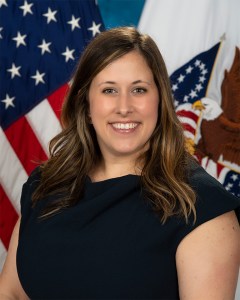
THE HONORABLE TIM S. MCCLAIN
GENERAL COUNSEL AND CHIEF MANAGEMENT OFFICER
U.S. DEPARTMENT OF VETERANS AFFAIRS
BEFORE THE
SUBCOMMITTEE ON GOVERNMENT MANAGEMENT, FINANCE, AND ACCOUNTABILITY
COMMITTEE ON GOVERNMENT REFORM
U.S. HOUSE OF REPRESENTATIVES

September 21, 2005

Mr. Chairman and members of the Subcommittee:

Thank you for the opportunity to testify on behalf of the Department of Veterans Affairs (VA) concerning the requirements and accounting standards for managerial cost accounting (MCA).  Accompanying me today are Mr. Ed Murray, Deputy CFO, Mr. Jimmy Norris, CFO for VHA, Mr. James Bohmbach, CFO for VBA, and Mr. Dan Tucker, CFO for NCA.  The VA Chief Financial Officer’s (CFO) staff has worked with VA’s three administrations—the Veterans Health Administration (VHA), Veterans Benefits Administration (VBA), and National Cemetery Administration (NCA), as well as other VA elements - to comply with federal accounting standards and federal financial management systems requirements.  This hearing and the GAO report have given VA the opportunity to review its managerial cost accounting system and have spurred senior management to review VA’s current practices.  In response to the comments in the GAO report, VA has initiated a broad review of available software and MCA programs to ensure VA systems provide the most accurate and reliable cost data to senior management.


VA’S MANAGERIAL COST ACCOUNTING SYSTEM

VA has been involved in managerial cost accounting since the subject was first considered by the Federal Accounting Standards Advisory Board.  VA assisted in the development and implementation of the Statement of Federal Financial Accounting Standards (SFFAS) No. 4, “Managerial Cost Accounting Concepts and Standards for the Federal Government.”  Subsequent to its adoption, VA formed, staffed and chaired the Federal workgroup that developed the “Managerial Cost Accounting Implementation Guide” that was adopted by the Federal CFO Council.  VA was one of the first departments to publish a comprehensive MCA policy that met the requirements of SFFAS 4, “Managerial Cost Accounting Concepts and Standards,” and required MCA implementation in all its major components.  The Department CFO oversaw and ensured that each VA administration implemented an MCA system that was appropriate for its line of business.  Further, in FY 2004, VA leadership established a Finance and Logistics Council to address numerous issues including the implementation and use of cost accounting in VA’s decision-making processes.  This council is chaired by the VA CFO and all VA administration CFOs are members. 


VA does not have a Department-level cost accounting system.  Due to the broad differences in size, mission and need, the three VA administrations were directed to establish independent cost accounting systems to meet the specialized requirements of their individual organizations.  VHA uses the Decision Support System (DSS), while NCA uses Activity Based Costing (ABC).  VBA also used an ABC system until early in FY 2004, but is not currently using this system.   MCA is not the sole source for making management decisions, but is used in conjunction with other factors in determining how resources are utilized.  The review by GAO has given VA senior management the opportunity to evaluate VA’s current MCA structure and we are actively pursuing state-of-the-art solutions.


NCA implemented an ABC accounting system at all national cemeteries to determine full costs and unit costs for cemetery services.  NCA staff worked to develop a cost model, which was implemented using commercial off‑the‑shelf   (COTS) software. The same model is used for all cemeteries, which links the resources consumed to the activities performed and the services provided.  NCA also determines costs for other programs it administers such as the State Veterans Cemetery Grant Program. 


The Decision Support System (DSS) is VHA’s managerial cost accounting system that integrates clinical, financial and workload data and has been fully implemented throughout the Administration since 1998.  DSS data allow each medical center to establish data-driven operating budgets at the Department level and to monitor monthly variance from expected cost and workload.  The process allocates resources, such as staff time and supply costs, to determine the cost to provide healthcare services locally.  In addition, DSS information is used in developing model prices for the Veterans Equitable Resource Allocation (VERA), which allocates funds across VHA’s 21 Networks.   Many Networks further allocate funding to facilities based on DSS costs, as DSS is able to provide detailed patient utilization information based on diagnosis and for services provided.  By using DSS utilization data, Networks are able to determine needed shifts of resources within the Network.  The system provides objective information which can be summarized at the Network and national levels for cost comparison and is used in various productivity measures.  Additionally, steps are being taken to ensure the availability of an adequate number of skilled professionals who are fully trained in managerial cost accounting practices at all levels of the Administration.  Comprehensive education and training related to implementation of DSS is available to all DSS site team members as well as Network DSS coordinators.   In an independent review completed by Bearing Point in September 2004, DSS was   verified as substantially compliant with the Chief Financial Officer’s Act of 1990 and other financial management regulatory requirements, including compliance with both SFFAS 4, “Managerial Cost Accounting Concepts and Standards,” and SFFAS 7, “Accounting for Revenue and Other Financing Sources.”  Although the system has been verified and functions as designed, VA has embarked on a full-system review to determine if there is a better system for MCA in the Veterans Health Administration.


VBA is currently in the process of re-establishing an MCA system, consistent with GAO’s recommendation that the Administration develop, implement, and operate an appropriate MCA system to improve managerial decision-making.  VBA concurred with this recommendation and has identified funding for MCA.  In July 2005, the VBA CFO directed his staff to develop a plan of action by October 1, 2005, to accelerate the development and implementation of MCA prior to 2007.  VBA concluded that extensive modification of the current ABC cost system model is not feasible given the change in VBA organizational structure and business processes.  VBA also conducted market research with two leading accounting firms to discuss managerial cost accounting methodologies and systems currently in use by government and private industry.  Finally, VBA is drafting a Statement of Work to assess VBA’s business processes and MCA requirements and to identify applicable systems that can be evaluated for use.


VA prepares a unified Statement of Net Costs (SNC).  The SNC is audited and is a component of VA’s annual consolidated financial statements.  VA anticipates implementing an annual certification process that will require VHA, VBA and NCA to state that they are meeting all the Federal requirements.  These annual certification statements will be presented to VA’s Finance and Logistics Council for review and approval. 


VA appreciates the professionalism of GAO and the many observations in their report.  However, VA does not agree entirely with all of the recommendations.  The GAO report stated that VA should periodically validate the non-financial data used for MCA and should assess related internal controls over non-financial data quality.  The VHA Decision Support Office (DSO) provides all VHA medical centers and Networks with a standardized and comprehensive audit guide.  This document identifies the audits to be conducted with a goal of ensuring that the data are complete and accurate in terms of the quantity of product (workload) and total dollars and hours (financial) captured in the system. 


VA instituted a self-certification program to ensure VHA medical centers comply with the requirements of SFFAS 4 and 7.  Accordingly, every 2 years each VHA medical center self-certifies that its cost accounting procedures comply with SFFAS 4 and 7 and that that their procedures comply with Federal pricing policies, including disclosures for non-recovery of full cost as appropriate.  The Management Quality Assurance Service (MQAS), part of the VA CFO’s Office of Business Oversight, is responsible for conducting random reviews of VHA medical centers’ certification statements to validate their statements and ensure the integrity of the self-certification program.  MQAS will compile the results of the random reviews and provide recommendations on necessary improvements to further strengthen VHA’s program.   


The GAO report concluded that VHA should document the DSS processes and controls for assigning direct and indirect costs to cost objects.  In fact, VHA does document processes and controls for assigning direct and indirect costs to cost objects.  Each year the DSO issues an Annual Fiscal Year Conversion document, which is a detailed set of processes for assigning direct and indirect costs, to the DSS teams at every VA medical center.  Refresher training is provided through a series of bi-weekly Teaching Calls that the DSO provides to those same site teams.


GAO also reported that VHA should take steps to ensure that there are adequate numbers of properly trained Information Technology (IT) staff at field locations to administer DSS in order to help maximize the utilization of DSS.  Because their primary function is to capture and report MCA data, DSS site teams are composed of professionals with financial and clinical backgrounds.  Once assigned, these personnel complete written and on-the-job training on the technical portion of the DSS.  Currently, DSO is sponsoring a workgroup that will provide staffing criteria to include the recommended professional background, training and required staffing level for all VA medical centers.  Very few, if any, field IT staff are involved in the hands-on operation of the DSS. 


VA continues to look at and implement mechanisms to streamline and automate the SNC process, where appropriate, in order to reduce the risks of errors and delays from manual efforts.  VA has an initiative underway, which will be implemented in FY 2006, to automate the preparation of its consolidated financial statements, which includes the SNC.  This follows VA’s successful implementation in FY 2005 of labor distribution functionality within its legacy payroll system that allows for tracking an employee’s costs by up to four distinct lines of business.  This effectively resolved a long-standing material weakness, and the Office of Inspector General approved the closure of this weakness in FY 2005.


While VA currently does not have a central repository for its accounting data, it does consolidate costs for the three administrations and staff offices in the SNC along ten lines of business.  End-of-year auditor adjustments are a normal function in preparing the Department’s consolidated financial statements.  They are not unique to the preparation of the SNC.  VA uses a network of Excel spreadsheets in preparing the SNC, which allows adjustments to flow through all the appropriate lines of business.  Implementation of the financial reporting tool in FY 2006 will assist in further automating the preparation of all VA’s financial statements. 


VA takes our financial management and stewardship responsibilities seriously. Over the past several years, our clear focus has been to maintain our unqualified audit opinion, which we have retained since 1999, and substantially reduce VA’s auditor-identified material weaknesses and reportable conditions.  From 2001 to 2004 VA has reduced material weaknesses and reportable conditions from eleven to four – a reduction of over 60%. 


However, VA realizes that more needs to be done.   VA has initiated a review of major MCA software providers to explore opportunities for a Department-wide MCA system.  A centralized MCA system would improve the accessibility and availability of cost accounting data and enhance managerial decision-making throughout VA.  This review is in conjunction with the Department’s efforts to develop an integrated financial management system. 


Mr. Chairman, this concludes my statement.    VA will continue to work toward full compliance with all federal accounting standards and federal financial management systems requirements.  My colleagues and I would be pleased to answer any questions.