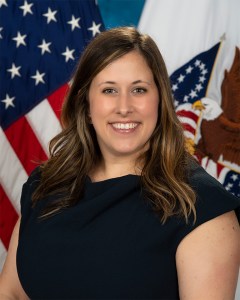
STATEMENT OF
ROBERT E. LYNCH, MD
DIRECTOR, VETERAN INTERGRATED SERVICE NETWORK 16
DEPARTMENT OF VETERANS AFFAIRS
BEFORE THE
HOUSE COMMITTEE ON ENERGY AND COMMERCE
SUBCOMMITTEE ON OVERSIGHT AND INVESTIGATIONS
March 13, 2007
Mr. Chairman and Members of the Committee, I want to start by thanking you for the universal support the United States Congress has given to the Department of Veterans Affairs ( VA) in its rebuilding and recovery efforts not only in southeastern Louisiana but also the entire Gulf Coast region. Through that support, our veterans and the VA employees living along the Gulf Coast continue to make great strides along the road to recovery.
Hurricanes Katrina and Rita challenged our country with two of its greatest natural disasters. While Hurricane Rita did little permanent damage to VA's infrastructure, Hurricane Katrina, on the other hand, produced unprecedented damage to its medical center in New Orleans. Our medical center, the community we serve, and the homes of veterans and employees sustained destruction on an monumental scale. Today I will describe our ongoing and planned health care restoration efforts in New Orleans.
I will speak first to VA health care recovery activities and its future plans in New Orleans. Next, I will address the Memorandum of Understanding that was signed between VA and the Louisiana State University ( LSU) System and actions associated with it. Finally, I will discuss VA's relationship with LSU as the State of Louisiana progresses in its analysis of state health care reform.
New Orleans Recovery Activities and Future Plans
Forty-eight hours following Hurricane Katrina's landfall, as quickly as weather conditions permitted, a VA damage assessment team was dispatched to the Gulf Region to survey VA facilities at New Orleans, LA; Biloxi, MS; and Gulfport, MS. At New Orleans, the team found that the VA facility initially weathered the storm with minimal damage. However, following the hurricane, water from the breached levees flooded the entire medical district and the medical center. Flooding of the basement and sub-basement in the main building of the VA Medical Center ( VAMC) rendered it inoperable as these areas housed the facility's major electrical, mechanical, and dietetics equipment. The medical center's long standing academic partner, the Louisiana State University Health Care Services Division at Charity and University Hospital, sustained similar types of damage. While University Hospital has re-opened, Charity Hospital is permanently closed.
In the immediate aftermath of Hurricane Katrina, VA's commitment to the Gulf Coast Region veterans remained steadfast. VA deployed a system of 12 "mobile clinics," in coordination with local authorities, to provide urgent and emergent care to include first aid, immunizations, and prescriptions. Specifically in Louisiana, mobile clinics provided care at Baton Rouge, Hammond, Jennings, Kinder, Lafayette, Lake Charles, LaPlace, and Slidell. VA mobile clinics treated 5,000 veterans and 11,000 non-veterans in the aftermath of Hurricanes Katrina and Rita.
To address the health care of veterans in the greater New Orleans area, VA expanded the capacity of its existing Community Based Outpatient Clinic ( CBOC) in Baton Rouge. We converted the ninth and tenth floors of the medical center, formerly the nursing home in New Orleans into exam rooms and began offering primary care services there in December 2005. Three months later in March 2006 limited specialty care clinic services were added to those units. Temporary facilities in LaPlace ( St. John's Parish), and Slidell were leased as alternate care sites. Tents were erected in Hammond to provide basic services.
With the support of Congress, VA was authorized to accelerate the activation of CBOCs proposed under CARES and opened a permanent clinic in Hammond in August 2006. We remain in leased space in Slidell and plan to construct a permanent clinic there in three to five years. The St. John CBOC is anticipated to open in October 2007.
Basic outpatient mental health services are provided at each of the clinic locations. Currently, inpatient mental health care is coordinated with the Alexandria ( LSU) VA Medical Center. Dental clinic services were re-established in April 2006 by leasing space in Mandeville, Louisiana. In Baton Rouge, we leased the old CBOC building in 2006 and are using that facility to house the medical center's clinical laboratory, as well as select administrative support functions.
As a result of these actions, the Southeast Louisiana Veterans Health Care System (SLVHCS), formerly known as the New Orleans VA Medical Center, served over 29,000 veterans in Fiscal Year 2006. This is 72% of the previous year's workload. Fiscal Year 2007 workload to date is growing at an annualized rate of ten percent over last year and is expected to increase as housing is restocked in the area.
To help our staff and support the community, VA worked with its academic affiliates, The Tulane University School of Medicine and the LSU School of Medicine, to place VA faculty, medical staff/residents, and student trainees at VAMCs throughout our VISN 16 Network.
With the VA's inpatient units shut down, 102 medical center employees that included nurses, health technicians, medical support assistants, operating room technicians, certified registered nurse anesthetists, and radiology technologists were temporarily deployed in July 2006 under a Federal Emergency Management Agency (FEMA) task order to provide critically needed staff support to local health care institutions.
In terms of future VA services in New Orleans, we continue to explore our long-term options for re-establishing surgical capabilities and inpatient services in New Orleans. In the interim, these services are coordinated through sister VA medical centers in Louisiana, Mississippi, and Texas, as well as through selective referrals to community hospitals in the New Orleans area at VA expense. We are actively pursuing options for expanding outpatient mental health services to meet current and future veteran's needs.
Projects for the re-establishment of radiology and outpatient pharmacy services on the grounds of the old medical center campus are underway and expected to be completed later this calendar year.
In preparation for the construction of a replacement medical center, VA has initiated its space planning process. Interviews of architecture and engineering firms to design the new facility are complete. A selection is expected this spring. The replacement medical center is expected to provide acute medical, surgical, mental health and tertiary care services, as well as long-term care.
Memorandum of Understanding between VA and LSU
As required in Public Law 109-148, VA compiled and presented its long-term plans for the construction of a replacement hospital in New Orleans in its February 2006, "Report to Congress on Plans for Re-establishing a VA Medical Center in New Orleans." In that report, VA identified its principal objectives regarding the New Orleans area as being not only to restore services to veterans in the most cost effective manner, but also to assist in the restoration of health care and medical education in New Orleans. Recognizing the successful history for sharing and collaboration between VA and the LSU Health Care Services Division, as well as the potential for future efficiencies, the report concluded that construction of facilities on a single campus with support services shared with LSU was the preferred option.
As a result of the "Report to Congress," VA and LSU leadership signed a Memorandum of Understanding ( MOU) agreeing to jointly study state-of-the-art health care delivery options in New Orleans. This MOU established the foundation for developing a collaborative approach to operating a replacement facility. From that a group of experts from both organizations, called the Collaborative Opportunities Study Group ( COSG) was charged with determining if any mutually beneficial sharing could occur between the two organizations. In the group's June 2006 report delivered to the former VA's Under Secretary for Health, it concluded that both organizations could leverage their strengths, provide significant operating efficiencies, and allow us to better serve our beneficiaries. Congress subsequently authorized VA to pursue the project to replace the New Orleans facility as a collaborative effort consistent with the COSG report.
In September 2006, the Collaborative Opportunities Planning Group ( COPG) was established to develop an operational plan for sharing between the two organizations based on the foundation work of the COSG. The COPG is co-led by VA and LSU representatives. Representatives of the Tulane University School of Medicine and the state of Louisiana Division of Administration are also part of this group and its planning discussions.
A critical component of the charge of the COPG is to determine if the proposed sharing options identified in the original COSG report are viable and if they are, to begin the work of developing timelines and formulating the framework for space planning and design for a joint replacement facility. To date the COPG has made significant progress by reviewing literally dozens of clinical and administrative functions to determine if the function would best be provided via a sharing arrangement between VA and LSU or independently owned and operated by both entities. The COPG's final report is to be presented by September 30, 2007.
VA's Future Relationship with LSU
The VA remains excited about its MOU with LSU in the context of health care redesign in Louisiana. We support all of the principles behind it. At the same time, health care redesign seems to face some obstacles and delays in Louisiana. Because of this, we are committed to exercising due diligence to our veteran beneficiaries and to the tax payers, and are concurrently exploring other options for initiating reconstruction of the Southeast Louisiana Veterans Health Care System's medical center within Southeast Louisiana. In furtherance of this, we plan to begin a site search to identify alternative locations in the near future while we continue to work with LSU on our collaborative plans.
Conclusion
Mr. Chairman, we consider the Committee and the Louisiana delegation to be partners with VA in seeing that southeast Louisiana veterans continue to receive the high quality health care that they have come to expect and deserve.
Congress appropriated to VA $1.2 billion in supplemental funding for recovery and rebuilding efforts. This includes $625 million to replace the New Orleans Medical Center. These efforts have enabled VA to provide timely access to care in New Orleans' surrounding communities through strategies such as leasing medical office space and establishing three new CBOCs.
The commitment to uncompromised excellence in health care and service to the community has resulted in bodies such as the Collaborative Opportunities Planning Group rethinking previously established relationships and identifying new strategies to improve operational efficiency and quality of care in areas such as academic medicine, use of electronic medical records, subspecialty care, and joint emergency preparedness planning. VA's construction of its new medical center will be an important part of improving healthcare services for veterans in New Orleans.
Thank you for the opportunity to be here today. I will be pleased to answer any questions you may have.