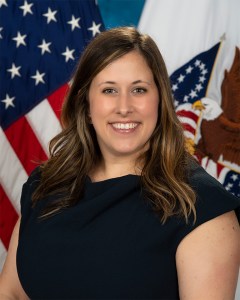
STATEMENT OF
KIM A. GRAVES
DIRECTOR, EASTERN AREA
VETERANS BENEFITS ADMINISTRATION
DEPARTMENT OF VETERANS AFFAIRS
BEFORE THE
COMMITTEE ON VETERANS’ AFFAIRS
UNITED STATES SENATE
APRIL 5, 2010
April 5, 2010
Senator Brown and Members of the Committee, it is my pleasure to be here today to discuss our efforts in meeting the needs of Veterans residing in Ohio. Joining me today are Joyce Cange, Director of the Cleveland regional office (RO), Jack Hetrick, Director of the Department of Veterans Affairs (VA) Healthcare System of Ohio (VISN 10), and Jeffrey Gering, Director of the Chillicothe VA Medical Center (VAMC). Today I will discuss important benefits and services provided to the Veterans of this state, including those Veterans living in Appalachia. I will also update you on improvements the Cleveland RO recently made in its service to Ohio Veterans, as well as the VA provision of health care services to Veterans in Ohio.
In response to Secretary Shinseki’s mandate to transform the Department, our efforts in Ohio are focused on ensuring the delivery of benefits and health care services on a Veteran-centric basis. Veterans’ needs are the principal driver of our efforts, and we are aware that reaching all of our Veterans requires sustained emphasis. We are also aware that our programs have an economic impact, particularly in areas such as Appalachia, and we will continue to focus on the timely and effective delivery of benefits and services.
Benefits Provided by the Cleveland RO
The Cleveland RO provides services and outreach to Servicemembers and Veterans throughout Ohio including Wright-Patterson Air Force Base (AFB) in Dayton. The RO administers the following benefits and services:
• Disability compensation for Veterans and their dependents;
• Vocational rehabilitation and employment assistance;
• Home loan guaranty and specially adapted housing grants for Veterans in the six-state jurisdiction of Ohio, Indiana, Michigan, Pennsylvania, New Jersey, and Delaware; and
• Outreach for all Veteran and survivor benefits.
The Cleveland RO also oversees one of the Veterans Benefits Administration’s (VBA) eight National Call Centers, staffing a toll-free benefits information line. In addition, the Cleveland RO houses VBA’s Tiger Team, a special claims processing team dedicated to reducing the number of claims pending in three categories: veterans age 70 and over with a claim pending over one year; claims pending over one year; and claims pending for veterans age 70 and over. The Cleveland RO’s goal is to deliver benefits and services in a timely, accurate, and consistent manner. This is accomplished through the administration of comprehensive and diverse benefit programs.
The Cleveland RO is responsible for delivering non-medical VA benefits and services to Ohio’s 913,000 Veterans and their families. Approximately 108,000 Ohio Veterans receive disability compensation and pension benefits. VA benefits paid in compensation and pension to Ohio Veterans totaled nearly $1.1 billion in 2009.
In fiscal year (FY) 2009, Cleveland completed nearly 25,400 decisions on Veterans’ disability claims, and the Cleveland Tiger Team completed nearly 20,000 additional decisions for Veterans from across the nation. Cleveland RO employees conduct an average of 590 personal interviews per month and answer approximately 44,700 calls per month in its National Call Center. The RO conducted 24 Transitional Assistance Program briefings to 572 Servicemembers in FY 2009.
The Cleveland Regional Loan Center (RLC) administers VA loan services to Ohio Veterans. VA has guaranteed over 766,500 loans in Ohio with a cumulative loan amount of over $29 billion. In FY 2009, the RLC guaranteed over 8,200 loans in Ohio worth over $1.3 billion, making homeownership in difficult economic times a reality for Ohio Veterans and their families.
To increase access to benefits, the Cleveland RO oversees benefits offices in Columbus and Cincinnati. RO employees are also available to assist Veterans at the Cleveland, Cincinnati, Dayton, and Chillicothe VAMCs, the Columbus VA Outpatient Clinic, and Wright-Patterson AFB. All Veterans, including those in more rural areas, are now able to obtain payment and claim-status information (notification, development, decision, or closure) via the eBenefits Web site. This web portal, created in conjunction with the Department of Defense, allows Veterans everywhere immediate access to information provided by VA.
Staffing
The Cleveland RO currently has 573 employees. During FY 2009, the RO hired 60 employees, including 38 Veterans, as a result of the American Recovery and Reinvestment Act (ARRA). All ARRA employees directly contribute to improved benefits delivery by assisting with the development of claims and mail processing. The RO employees are very motivated and dedicated to making a difference in the lives of Ohio Veterans.
Improvements in Service Delivery
The Cleveland RO is continuously seeking ways to improve its delivery of benefits and services to Ohio Veterans. During FY 2009, the Cleveland RO improved the accuracy of its rating-related decisions by over five percentage points to 88.4 percent. This accuracy rate, which is higher than the VBA national average, has been sustained this year. The Cleveland RO currently decides claims in an average of 161 days. This is comparable to the VBA national average of 160 days and is a 45-day improvement over the Cleveland RO’s average processing time in FY 2008. Increased staffing, and improved proficiency of that staff as their training progresses, as well as the office’s focus on workload management, are the principal contributors to that improved performance.
The Cleveland RO’s pending rating-related claims inventory currently averages approximately 10,800 claims. The RO has maintained this level of inventory even while the office’s incoming claims volume, through February of this fiscal year, has increased nearly 6.8 percent over the comparable period in fiscal year 2009. This represents a 28 percent reduction since the RO’s record-high inventory of 15,123 at the end of
FY 2006.
Like you, I have been concerned about the well-publicized fact that Veterans in Ohio historically received lower disability compensation payments than Veterans residing in other states. I assure you that the Cleveland RO takes this issue seriously and understands the impact of accurate rating decisions on Ohio’s Veterans and our stakeholders. Under the Veterans’ Benefits Improvement Act of 2008, VA was required to provide a description of any differences regarding ratings for service-connected disabilities among various populations of Veterans. VA contracted with the Institute for Defense Analyses (IDA) to perform this study. As in a prior study, IDA concluded that there are many demographic and claim-specific reasons for variances among states. Factors such as the number of claims received for disability compensation based on Individual Unemployability and Veterans’ military retiree status all play a part in state variances. Reports identifying Ohio as one of the historically lowest states in compensation payments are based on the totality of benefit awards to all Veterans currently receiving compensation, representing over 50 years of rating decisions. However, IDA’s recent study showed that for initial claims decided in fiscal years 2006 through 2008, Ohio’s average compensation ranked 30th of all states.
To ensure that the Cleveland RO’s decision-makers are consistent with other offices, the Cleveland RO developed an extensive training plan for all employees. With a full- time training manager dedicated to employees’ learning, each technical employee involved in the claims process receives a minimum of 80 hours of technical training annually. This training consists of 40 hours of Core Technical Training, 20 hours of standardized topics chosen by VBA, and 20 hours of training chosen by the RO for local issues and areas of concern. Such training includes having employees prepare mock
decisions based on standard fact patterns. These mock exercises ensure that decision- makers consistently review evidence and apply the law equitably.
Furthermore, all new employees hired to work disability claims receive comprehensive training and a consistent foundation in claims processing through a centralized training program called Challenge. During FY 2009, the Cleveland RO had 35 newly hired or promoted employees attend centralized training under the Challenge program. The Challenge concept also includes extensive prerequisite courses prior to attending the centralized training segment and a standardized, rigorous training curriculum following it. Standardized computer-based tools have also been developed for training decision- makers. Training letters and satellite broadcasts/NetMeetings on the proper approach to rating complex issues are also provided to all ROs.
As a result of the Cleveland RO’s training efforts, the office has historically high pass rates on employees’ Skills Certification Tests, a standardized testing system used to promote employees.
Outreach and Partnerships
To help the Cleveland RO reach as many Veterans as possible, especially in the heart of Ohio’s Appalachian Country, the Cleveland RO began providing VA benefits counseling services at the Chillicothe VAMC in January 2010. By partnering with the Medical Center, the RO now staffs a benefits office two days per week to assist Veterans and their families. Since the start of its on-site presence, the RO has served over 140 Veterans in Chillicothe. I am pleased that the RO is meeting a very real need to get information and assistance to these more difficult-to-reach areas of Ohio.
I am also proud of the Cleveland RO’s successful relations with VA’s stakeholders. The RO provides office space to nine major Veterans’ Service Organizations in the Cleveland facility. The RO recently welcomed the arrival of a permanent service officer of the Ohio Department of Veterans Services. The RO provides quarterly training to all of Ohio’s 88 County Veterans Service Offices and recently completed a Congressional Liaison Seminar for local Congressional staffers.
The Cleveland RO actively works with the Ohio Department of Veterans Services to identify and solicit claims from Ohio Veterans from all areas of the state, including Appalachia. The creation of this Ohio Cabinet-level department increased awareness of Veterans’ needs in the state. The RO looks forward to further development of its working relationship with the Director, Bill Hartnett, and the Ohio Department of Veterans Services, as we work together to meet the needs of Veterans. As one of its first shared tasks, the Cleveland RO is working with the Ohio Department of Veterans Services to pilot the use of a checklist for claims submitted by Ohio’s County Veterans Service Officers to ensure the timely submission of evidence to expedite claims processing.
Health Care Services
The VA Healthcare System of Ohio, Veterans Integrated Service Network (VISN) 10, consists of four VAMCs, one health care center, and 30 community-based outpatient clinics (CBOC). VISN 10 provides mental health services at all 30 CBOC locations. The Louis Stokes Cleveland VAMC has a total of 13 Outpatient Clinics located throughout Northeastern Ohio.
VISN 10’s strategic plan of providing access to primary care and mental health services within 30 minutes or 30 miles, as well as access to tertiary care within 60 to 120 miles of all of Ohio’s Veterans, has been accomplished. VISN 10 consistently ranks highest across the Department in access to clinical care with less than 0.4 percent of Veterans waiting more than 30 days for an appointment in FY 2009. These achievements are noteworthy, but there is always more we can do to improve the care Ohio Veterans receive.
The Canton Outpatient Clinic is 25,000 square feet in size and serves over 12,200 Veterans. Current services offered at the Clinic include primary care, mental health, optometry, podiatry, laboratory services, pharmacy benefits, home-based primary care, women’s health, and radiology. Two additional outpatient clinics located in Akron and New Philadelphia serve 12,380 and 2,800 Veterans, respectively. The Lorain CBOC is fully operational at the St. Joseph Community Center. Through the first five months of FY 2010, it has treated 6,152 Veterans.
VA is expanding the Middletown CBOC, more than doubling its size from 7,000 square feet to more than 18,500. The Middletown CBOC currently provides onsite primary care, preventive medicine, laboratory services, outpatient mental health, intensive case management for mental health, optometry, home-based primary care, and pharmacy benefits. By 2011, when the expansion is complete, the facility will also offer occupational and physical therapy, as well as radiology. VA’s Office of Rural Health is awarding $1 million to establish an Outreach Clinic in Wilmington to provide primary and mental health care for rural Veterans. VA is working hard to establish this clinic, and the Department expects to activate the clinic by this summer. VISN 10 continues to explore further options for enhancing care in rural Ohio, and to improve home-based primary care, tele-medicine, optometry, podiatry, and mental health care.
Conclusion
VA has made significant improvements in delivery of health care and benefits to Ohio Veterans. Such improvements have helped prepare the RO to process approximately 5,000 claims anticipated to be received as a result of the recently announced new Agent Orange presumptive conditions of ischemic heart disease, Parkinson’s disease, and certain leukemias. We have also improved the quality and availability of health care for Veterans across the state. VA is committed to providing the necessary resources to ensure the best possible service is available to Ohio Veterans and their families.
Senator, this concludes my testimony. I greatly appreciate being here today and look forward to answering your questions.