


CVNR Health Research Expo showcases advances in eye and brain health
By Gregory Kendall, Public Affairs Specialist
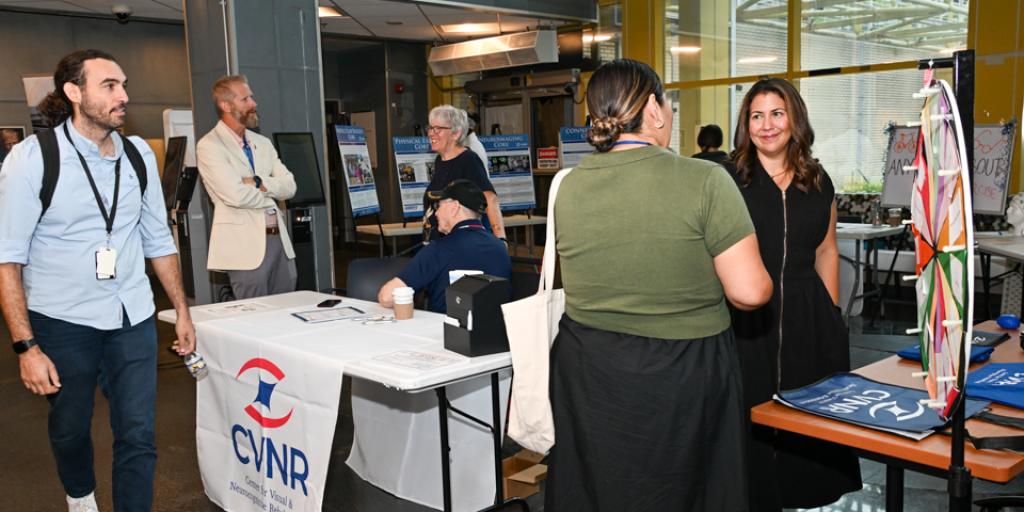
Veterans and visitors had an opportunity to see how research is helping shape the future of health care during the Center for Visual and Neurocognitive Rehabilitation (CVNR) Health Research Expo Oct. 2 at the Atlanta VA Health Care System.
The special event provided an inside look at groundbreaking research focused on eye and brain health, while giving attendees an opportunity to interact with researchers, explore exhibits and participate in activities designed to make complex research more accessible and engaging.
From vision and cognitive health to rehabilitation and neurological conditions, the expo highlighted the scope of research taking place through the CVNR and demonstrated how discoveries made through research can ultimately translate into better treatments and improved quality of life for Veterans.
“Research can sometimes seem like something that happens far away from the people it is intended to help,” said Alexandra Mayes, CVNR Connectivity Core Manager. “This event gave us an opportunity to bring that research directly to Veterans and our employees, Mayes explained. "We wanted Veterans to see what we are studying, ask questions, interact with the researchers and understand how their participation can help move health care forward.”
Attendees explored interactive exhibits and participated in activities that demonstrated the relationship between vision, the brain and everyday function. The event also encouraged meaningful conversations about research and the ways scientists and clinicians are working to better understand and treat conditions affecting Veterans.
For Army Veteran Thomas Jones, attending the expo provided a chance to learn more about the research taking place at the Atlanta VAHCS and how it could benefit Veterans.
“I was impressed by how much research is being done to understand the connection between the eyes and the brain,” Jones said. “The interactive exhibits made it easier to understand what researchers are working on and why it matters. As a Veteran, it is encouraging to see research focused on finding better ways to help people live healthier and more productive lives.”
The CVNR is a VA Rehabilitation Research and Development Center located at the Atlanta VA Medical Center. Its research spans visual, cognitive and neurological rehabilitation, with investigators studying conditions that affect Veterans and developing approaches aimed at improving function and quality of life.
Mayes said events such as the Health Research Expo are also important because they help strengthen the relationship between researchers and the Veterans who participate in research.
“Veterans are an essential part of the research process,” Mayes said. “Their willingness to participate, share their experiences and provide feedback helps us understand what works, what can be improved and what new questions we need to answer. Ultimately, our goal is to turn what we learn through research into meaningful improvements in the lives of Veterans.”
The CVNR has also used community outreach and educational events to share information about brain health, research and rehabilitation with Veterans and the broader community.
For Jones, the expo reinforced the importance of staying connected to research.
“Events like this give Veterans a chance to see the people behind the research and learn how today's studies can lead to tomorrow's treatments,” he said. “It makes you feel like you are part of something that can make a difference for Veterans now and in the future.”
The Health Research Expo offered more than an opportunity to learn about science. It provided Veterans with a closer look at how research is transforming the understanding of vision and brain conditions and how those discoveries can ultimately help improve the care available to the Veteran community.