


Leading the Way in Treating Atrial Fibrillation
By Justin Saucier, STVHCS Public Affairs
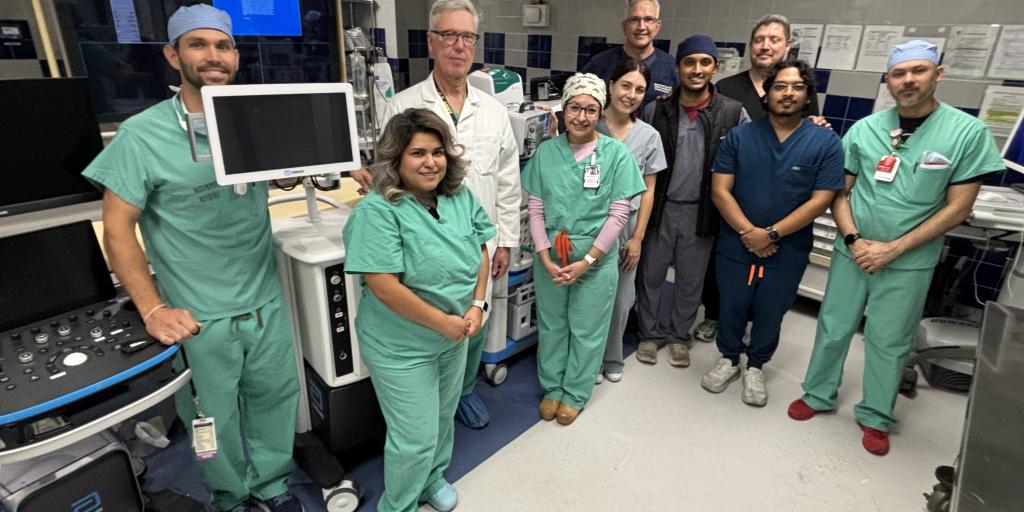
South Texas Veterans Health Care System’s Heart Center electrophysiology team at Audie L. Murphy Memorial Veterans Hospital recently marked a major milestone for the city of San Antonio by completing an Intracardiac Echocardiography integrated second generation Volt Pulsed Field Ablation procedure.
Many Veterans, including Richard David Thompson, a U.S. Navy Veteran who served 25 years, live with atrial fibrillation - an irregular heart rhythm that causes the upper chambers to beat chaotically and out of sync with the lower chambers. Thompson had the distinction of undergoing this advanced procedure designed to restore normal heart rhythm safely and efficiently.
“Veterans deserve the best,” Thompson said. “The only way to get the best technology is to push to get the best. This is fantastic. If my dad, who was also a Veteran, were alive, he would be thrilled.”
Atrial fibrillation can lead to heart palpitations, shortness of breath, dizziness, fatigue, and an increased risk of stroke and heart failure. The new ICE‑integrated PFA approach provides a promising option for faster relief with fewer risks.
During the procedure, the PFA system enabled mapping, pacing and ablation through a single catheter - reducing catheter exchanges, procedural complexity, and overall procedure time. It also eliminated the need for intubation, general anesthesia, and Foley catheter placement, making the experience significantly less invasive.
For Thompson, who enjoyed trying new things during his military career, the approach offered an opportunity to receive cutting‑edge care with a quicker and more comfortable recovery.
He expressed gratitude that VA offers access to this technology, noting that its benefits extend beyond his own health. Thompson said he hopes more Veterans will be able to receive timely treatment for atrial fibrillation.
I am profoundly impressed by how far the team had progressed and by the exceptional quality of their work,” said Dr. Julianne Flynn, STVHCS Executive Director.
To perform the procedure, the electrophysiology team used a 3D mapping catheter to create a detailed model of Thompson’s left atrium and pulmonary veins using voltage signals. Once mapping was complete, the PFA balloon catheter was inserted, shortening the procedure and improving overall precision.
The team was led by Dr. James Mullin, a clinical cardiac electrophysiologist who joined STVHCS in 2023. Mullin explained that traditional ablation procedures rely on heat, which brings certain risks. PFA instead delivers 1,800 volts of electricity directly to cardiac tissue without generating significant heat.
“This is a major advantage in performing the atrial fibrillation ablation procedure,” Mullin said. “The patient does not need deep anesthesia and usually does not need to be intubated. We can perform the procedure with much less sedation, which may allow the patient to go home just a few hours afterward rather than staying overnight.”
Another benefit of this method is the ability to complete multiple ablation procedures in a single day, helping reduce wait times and allowing the Heart Center team to serve more Veterans quickly.
Thompson said he once feared suffering a stroke while waiting for treatment. With this new approach now available at Audie Murphy, he hopes other Veterans will have access to faster care and improved outcomes.
His message to fellow Veterans considering the procedure: “Absolutely go for it. This was nice. It removed the need for an airway tube and no Foley catheter — so much better.”