


One Veteran's camera finds a new home with 92-year-old photographer
By Hunter Gordian, Medical Media Section Chief
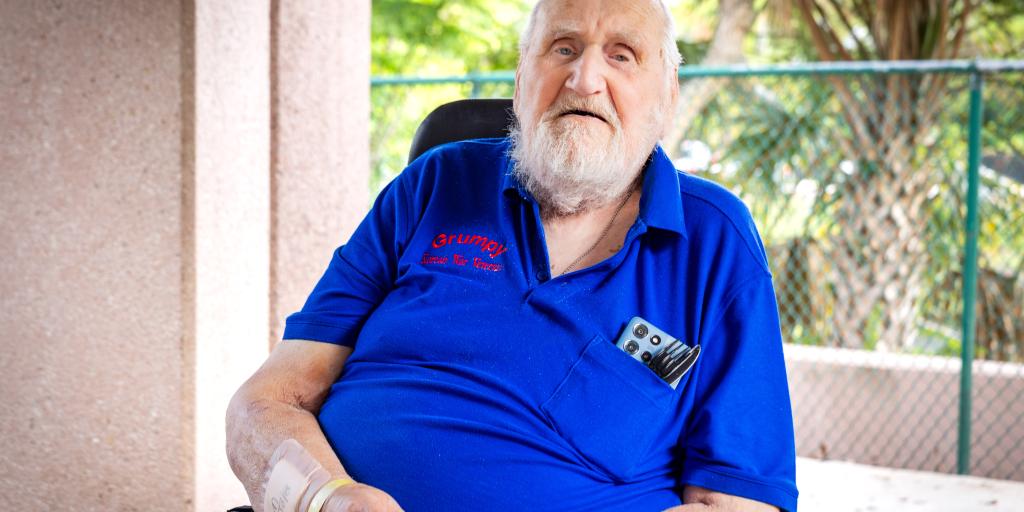
For 92-year-old Army Veteran Ron Singer, photography is not simply a hobby. It is, as he put it, “life.”
Photography has followed Singer — affectionately known as “Grumpy” — for most of his life, from his military service and civilian work to his current home in the Thomas H. Corey VA Medical Center’s Community Living Center.
It has also given him a way to “capture the moments you don’t always remember,” said Singer.
So when his DSLR camera stopped working, losing it meant more than losing a piece of equipment.
Singer wheeled into the medical center’s Communications office with the camera in hand, asking for help to get it working again.
The Communications team tried.
The camera was cleaned. The lens, battery and other components were checked. Ultimately, it became clear the aging camera had reached the end of its usable life.
Photography through the years
Singer recalled owning several cameras over the years — at one point, he owned four different cameras while working as a civilian for the Air Force in Greenland. Some of the places and scenes he photographed there remain vivid in his memory today.
He worked with an array of professional camera equipment through the years, including medium-format systems and long lenses. But DSLR cameras remained a constant.
For Singer, photography is therapeutic. It has continued to give him a creative outlet at the Community Living Center. He has been working on a collage of his photographs for his Elks Lodge and spoke about using photos to revisit places, people, and experiences from throughout his life.
While Singer’s photography is his personal hobby, it reflects how purposeful activities can promote quality of life, connection, and continued engagement. Photography is consistent with the kinds of structured, meaningful leisure activities used in recreation therapy. VA recreation therapy uses activities such as art, music, movement and other recreational modalities to support Veterans’ physical, emotional, cognitive, spiritual and social well-being.
An unexpected connection
Knowing how much the camera meant to Singer, the Communications team reached out to the Center for Development and Civic Engagement (CDCE) to see whether a replacement might be available through donations.
CDCE Chief Shawn Montgomery helped search for a camera. And then came an unlikely connection.
Sandy Swafford, a representative of the American Legion Auxiliary, had recently been sorting through the belongings of her late husband, an Army Veteran, when she came across his camera.
She wondered what she should do with it.
Soon afterward, she learned about Singer — another Army Veteran, another photographer who suddenly found himself without a working camera.
The answer seemed to present itself.
With Montgomery’s help, Swafford visited Singer at the Community Living Center and surprised him with the camera.
His astonishment quickly turned into a smile.
Singer joked that Swafford was ruining his “Grumpy” reputation as the two laughed during the visit. Swafford also brought him a user manual and helped him get acquainted with the camera.
Then Singer raised the camera and took his first photograph.
His subject was Swafford.
The image marked the beginning of another chapter for a camera that had already belonged to one Army Veteran and now belonged to another.
Capturing what comes next
For Singer, this new lens meant getting back to something that has helped him document much of his life — and preserve moments long after they have passed.
While no camera could restore every photograph he took or every negative lost to time, the
donated camera gives him the ability to keep creating new ones.
The story began with a Veteran wheeling into the Communications office with a broken camera and asking for help.
It ended with a camera finding a new home, two Army Veterans connected across generations, and “Grumpy” once again looking at the world through a camera lens.
To learn more about recreation therapy, speak to a VA care provider or visit VA’s Recreation Therapy webpage.