


A Summer of Service: Student Volunteers Strengthen Veterans’ Digital Confidence
By Brutus Paxton, Pathway Student
Youth volunteers at the Thomas H. Corey VA Medical Center made technology easier and more accessible this summer by helping more than 183 Veterans navigate VA apps, telehealth platforms, and personal devices.
Connecting Veterans Through Technology
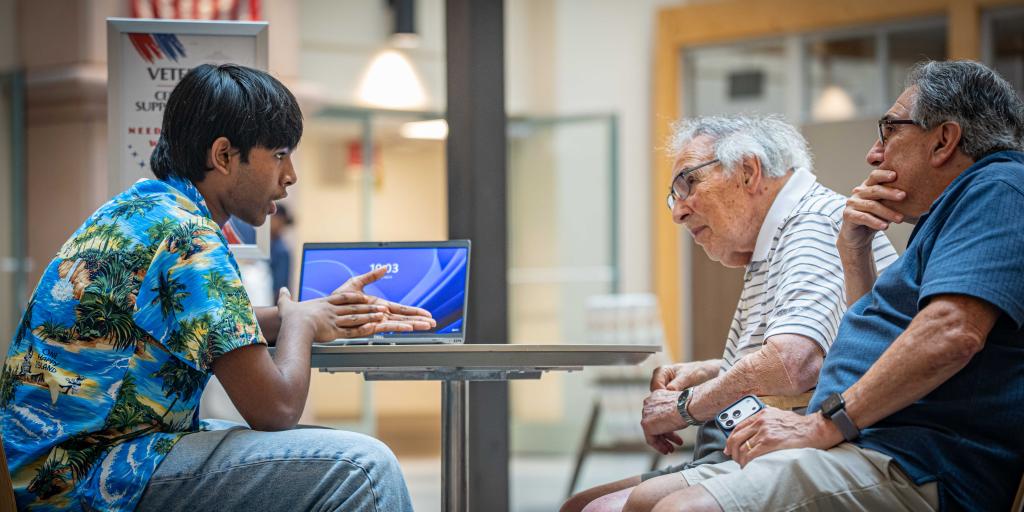
Veterans often don’t know where to turn for help with technology. This summer, student volunteers at the Thomas H. Corey VA Medical Center stepped in to provide one-on-one assistance at a newly established Veterans Cell Phone Support Station, easing frustration and building confidence.
“Many Veterans are unfamiliar with smartphone features, app downloads, and telehealth access,” said Shawn Montgomery, Chief of the Center for Development and Civic Engagement (CDCE). “The Cellphone Assistance Program has reduced technological anxiety and built Veterans’ confidence in using their devices.”
Student volunteers helped Veterans sign into My HealtheVet, set up the VA Health and Benefits mobile app, use VA Health Chat, and prepare for VA Video Connect appointments, allowing Veterans who had struggled with virtual care to successfully connect with their providers.
Solving Real Problems, Making Real Impact
One of those volunteers was 16-year-old Adeeb Karim, who spent the summer supporting Veterans at the medical center. Known for his patience and knack for troubleshooting, Karim quickly became one of the most relied‑upon youth volunteers at the Veterans Cell Phone Support Station.
On his final day of volunteering, Karim faced one last challenge: a Veteran named Mr. Warren needed help connecting a TV streaming device to his hearing aids. After running through a series of questions about the cables, connections, and pairing process, Karim discovered the issue; Warren’s hearing aids powered off inside their charging case, preventing them from entering pairing mode.
“That’s a mystery that you solved for me,” Warren said.
That moment captured the program’s purpose: providing practical, patient guidance that helps Veterans stay connected to their care, benefits, and daily life.
More Than Fixing a Device
Karim, who begins his junior year at Suncoast High School this fall, originally spent part of his summer pushing a comfort cart through the medical center. His technology skills soon caught the attention of staff, and he was called upon to assist in the establishment of the Veterans Cellphone Assistance Program.
“I like seeing the smile on Veterans’ faces when I help,” he said.
Karim’s teaching rule is simple: let Veterans hold and control their own devices. He guides, explains, and steps back, only demonstrating with permission.
That approach mattered when Warren needed help verifying his identity for the VA Health and Benefits app. Karim walked him through each step. After 20 minutes, the confirmation screen appeared.
“Yes! High five. You did it,” Karim said.
Warren could now view his benefits and payment information directly from his phone. “You’re a lifesaver,” he told Karim. “I’m very impressed. I wish I could put you in my pocket.”
Service That Lasts
Many interactions began with a technology question and ended with meaningful conversation. Karim said Veterans’ stories left a lasting impact on him.
“Volunteering here is hard work, but it’s honest work,” Karim shared during the end-of-program celebration. “I think I am getting paid in making people happy and making a difference.”
On his final day, Karim turned a pair of hearing aids and a phone app into something bigger: a Veteran who left more connected to his care and benefits, and a student who walked away with a deeper understanding of service, reminding us all that everyone has a role to play in caring for those who served.
Although the 2026 Summer Youth Volunteer Program ended, the Cellphone Assistance Program will continue. CDCE is actively recruiting volunteers to provide ongoing assistance. To get involved, visit the volunteering with the West Palm Beach VA Healthcare System webpage.