


Walking in Their World: New Simulation Helps Staff Understand What Veterans with Dementia Experience
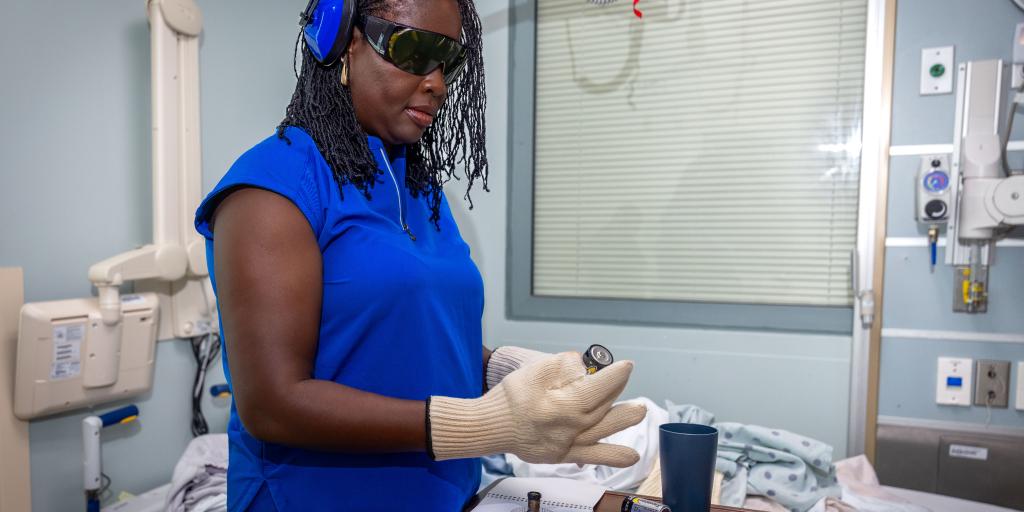
By Alvaro Galan, Public Affairs Specialist
I couldn't see straight. I couldn't hear what was being said to me. My hands wouldn't do what I told them to do. Every step hurt.
For a few minutes, I existed in a version of the world I didn't recognize and then, it was over. I took off the goggles, gloves and headphones. I knew, the whole time, who and where I was and that it would end.
That's the part I haven't been able to shake since. What I felt was a temporary simulation built to end. But what Veterans living with dementia experience is neither temporary nor engineered — it doesn't come with an off switch. My hardship was a glimpse. Theirs is a life.
That is exactly the experience that the West Palm Beach VA Healthcare System’s dementia simulation training is designed to provide. I don't work in a clinical role, but that did not make the experience any less eye-opening for it. If anything, it reminded me that understanding what our Veterans go through isn't just the responsibility of those who provide hands-on care. It's something each VA employee should carry.
Stepping Into Someone Else's Experience
Nursing and other healthcare staff are participating in the hands-on simulation training, offered through the Office of Professional Development and led by Nurse Educator Dianne Ragno and Doctor of Nursing Practice Student Marie Augustin Herold. It begins with a brief overview of dementia, followed by an exercise in which participants attempt a series of everyday tasks while experiencing simulated sensory and cognitive difficulties, including: picking up coins from a flat table and placing them into a coin purse; recalling instructions they were given before entering the room; and navigating the space while their vision is obstructed. Participants do this while contending with similar disorienting sensory and cognitive challenges that many Veterans with dementia experience every day.
The exercise concludes with a structured debrief, giving participants space to process what they felt and discuss how it connects to Veteran care.
“Harder Than I Expected”
Reactions from participants have been immediate and candid. Common reflections include:
- “This was harder than I expected.”
- “I felt frustrated.”
- “I understand better now.”
- “It makes you think about what the patient is experiencing.”
“These reflections capture an important purpose of the simulation: encouraging healthcare professionals to view behaviors from the perspective of the person living with dementia,” said Herold.
Carrying It Forward
The goal isn't just a memorable exercise, it's a lasting shift in how staff approach care. By experiencing even a fraction of the confusion, frustration and effort that Veterans with dementia may experience, participants are better equipped to respond with patience and understanding when a Veteran seems agitated, withdrawn or slow to respond.
“Sometimes, even a glimpse of another person's world can change how we see, understand and care for them,” Herold said.
I believe that is true. For a few short minutes, I felt disoriented and it changed how I think about every Veteran who walks through the doors of the Thomas H. Corey VA Medical Center. I hope every person who participates in the simulation training walks away with a better understanding of how some Veterans living with dementia experience everyday tasks because that understanding is where patience, humility and better care begin.
If you're a Veteran, a family member, or a caregiver navigating a dementia diagnosis, you don't have to walk that path alone. Visit VA's Dementia Care and Alzheimer's Disease resources at www.va.gov/GERIATRICS/pages/Alzheimers_And_Dementia_Care.asp to learn more about the support, services, and caregiver resources available.