


You are viewing this page as a VA beneficiary.
Research
We have an expanding research department. As of July 2026, There are 29 active institutional review board (IRB) approved studies. There are multiple active collaborative research projects between the institutions in areas of both clinical and basic science. We are the first site to have clinical trials including oncology studies in the new federal electronic health record (FEHR).
We are a research and teaching facility. We have a strong affiliation with Rosalind Franklin University of Medicine and Science (RFUMS), which is the home to the Chicago Medical School (CMS). Overall, we have 100 active affiliation agreements with accredited academic institutions.
CMS sponsors residency and fellowship programs in the specialties of internal medicine, psychiatry and physical medicine and rehabilitation. We are a key training site for each of these CMS training programs. The majority of providers and researchers here are faculty members at RFUMS/CMS. We host over 700 unique health care trainees annually. We train approximately 370 medical students from CMS annually.
In November 2017, RFUMS broke ground for the construction of a new research park adjacent to our North Chicago campus. The Innovation and Research Park is currently open and is a fertile environment for collaboration and creativity among academic and industry scientists, innovators and entrepreneurs. The 100,000 square foot laboratory and office space encourages interaction, the free exchange of ideas and sharing of expertise and scientific tools. Two-thirds of this space are allocated to the university's recent labs, while one-third is available to industries and startups. Each floor of the new building includes shared “collision space “to facilitate conversation and collaboration between researchers and industry.
In addition, RFUMS has an incubator space housing eight very early companies that can help accelerate innovation and research.
Currently there are several ongoing collaborative research projects between RFUMS and our facility.
Ongoing research
Prevention of Cardiovascular and Diabetic Kidney Disease (PRECIDENTD) trial
The PRECIDENTD study compares two diabetes medicines, SGLT2 inhibitors and GLP-1 receptor agonists, to see which works better at lowering the risk of heart problems in people with type 2 diabetes who already have, or are at high risk for, heart disease.
Who can join the trial
- You must have type 2 diabetes (diagnosed by your doctor)
- You must be 40 years or older and have had a heart attack, stroke, or stents placed to open blood vessels OR you must be 60 years or older and have A1C above 8, chronic kidney disease, or smoke
- Your A1C (blood sugar test) must be 6% or higher in the last year
- You must be willing to take one of two types of diabetes drugs (SGLT2 inhibitors or GLP-1 receptor agonists) and follow the study visits
Who is not eligible
- You cannot have type 1 diabetes
- You cannot have severe kidney problems (very low kidney function)
- You cannot have active cancer or certain other serious health problems
- You cannot be pregnant or breastfeeding
- People who cannot take the study medication and attend follow-up visits
PREVENTABLE: Lipid-lowering in older adults trial
The PREVENTABLE study tests if the drug atorvastatin (Lipitor) can help people age 75 or older stay healthy longer by lowering the risk of memory loss, disability or heart problems. People can join if they don’t already have these conditions. Participants are randomly given either the real drug or a fake one (placebo) for up to five years. They will have checkups, blood tests, and memory and physical tests, plus yearly phone calls to track their health.
Who can join the trial
- 75 years or older
- You live in your own home (not in a hospital or nursing home)
- Speak English or Spanish
- No heart disease (like a heart attack or stroke), no dementia, and no major disability that limits your basic daily activities
- You are not taking a statin right now and you have never taken one for more than five years in the past
- You can take Atorvastatin 40 mg safely and you do not have severe hearing or vision problems that would stop you from being followed by phone
Who is not eligible
- History of heart attack, stroke, heart surgery or being on a statin for secondary prevention
- Hospitalized for heart failure in the last year
- Any diagnosis or signs of dementia
- Severe disability so that you can’t do basic daily tasks (like bathing or dressing) without help
- Severe hearing/vision loss as this will make it hard to be followed by phone
- Known problem with statins
- Active liver disease
- Long-term use of colchicine, verapamil, or diltiazem at high doses
- Ineligible to take Atorvastatin 40 mg
Walk-related performance fatigability as fall risk marker in prosthesis users
Walk-related performance fatigability as fall risk marker in prosthesis users study looks at how tired people with a below‑knee prosthetic leg get while walking and if that tiredness makes them more likely to fall, especially those with diabetes. Participants will do walking and balance tests with body sensors and fill out a short survey every two weeks for six months to report any falls.
Who can join the study
- Has a single below‑knee (transtibial) amputation
- Has used a prosthetic leg for at least six months
- Uses the prosthesis to walk outside (at least a limited community ambulator)
- Has a well‑fitting, working prosthesis
- Has access to an active email account (their own or a reliable family/friend helper)
Who is not eligible
- Has an open wound on the residual limb that means they are not allowed to wear the prosthesis, as ordered by a doctor or prosthetist
- Has a progressive neurologic disease or other condition where fatigue is a known symptom (for example, multiple sclerosis or Parkinson’s disease)
- Has leg or hip muscle pain, cramping, or tiredness when resting, or has diagnosed severe intermittent claudication (serious blood‑flow problems in the legs)
Bharathi Swaminathan MD
Associate Chief of Staff (ACOS), Research and Development
Lovell Federal health care
Phone:
Email: bharathi.swaminathan2@va.gov
Noah Rosenblatt MD
Co-investigator
Lovell Federal health care
Phone:
SUNRAY-02: Olomorasib plus immunotherapy for KRAS G12C non-small cell lung cancer
This study is testing a new drug called olomorasib, taken with standard immunotherapy, for people with a specific type of lung cancer called KRAS G12C non-small cell lung cancer (NSCLC). It will compare olomorasib plus usual treatment to usual treatment alone to see if it keeps the cancer from growing or coming back and to check for side effects.
Who can join the study
- Adults 18 years or older with non-small cell lung cancer (NSCLC) that have a KRAS G12C mutation confirmed by lab testing
- Able to do most normal daily activities (ECOG performance status 0–1)
- Blood and organ tests (liver, kidney, blood counts) are within safe limits before starting the study drugs
- Able to swallow pills
- People who can become pregnant must have a negative pregnancy test and agree to use birth control as required by the study
- Willing and able to sign an informed consent form and follow the study schedule of visits and tests
For the surgery group (Part A):
- Have stage II–IIIB lung cancer that could be removed and has already been removed with surgery meant to cure the cancer
- No signs of the cancer coming back on exams and scans before starting the study
- Have received or are receiving standard chemotherapy as part of their usual treatment plan
For the non-surgery group (Part B):
- Have stage III lung cancer that cannot be removed by surgery (unresectable)
- Have finished combined chemotherapy and radiation (chemoradiation) within the required time window, without the cancer getting worse during that treatment
Who is not eligible
- Certain other types of lung tumors, or more than one active lung cancer at the same time
- Lung cancer with other known driver changes (for example, EGFR or ALK) that have their own approved targeted drugs
- Another active cancer that needed treatment in the last two years, except for a few low-risk cancers (like some skin cancers or very early prostate or bladder cancer)
- A history of interstitial lung disease or serious non-infectious lung inflammation (pneumonitis) that needed treatment
- Serious or uncontrolled infections, including untreated HIV, active hepatitis B or C, or active tuberculosis, unless very specific conditions are met
- History of organ transplant
- Active autoimmune diseases that recently needed strong immune-suppressing medicines (with some exceptions such as thyroid hormone or insulin)
- Certain serious heart problems (like recent heart attack, uncontrolled heart failure, or dangerous heart rhythm problems), or very abnormal heart rhythm on a heart tracing (ECG)
- Serious medical or mental health problems, or substance use issues, that would make it unsafe to join (as judged by the study doctor)
- Trouble absorbing medicine from the stomach or intestines
- Ongoing moderate or severe side effects from earlier cancer treatments (mild issues, like hair loss, may be allowed)
- Past strong or ongoing serious side effects from prior immunotherapy
- Recent use of certain “live” vaccines (such as some travel or nasal flu vaccines) within 30 days before starting study treatment
- Currently pregnant, breastfeeding or planning pregnancy or breastfeeding during the study and for a set time afterward
- Participation in another drug study too close to the start of this study
Additional rules for the non-surgery group (Part B):
- Having non-standard chemoradiation before this study (for example, certain unusual drug combinations)
- Ongoing moderate lung inflammation (pneumonitis) from earlier chemoradiation
- Body weight less than 30 kilograms (about 66 pounds)
Mukta Pant-Purohit MD
Principal investigator
Lovell Federal health care
Phone:
Email: mukta.pant-purohit2@va.gov
Hours of operation
Our hours of operation are Monday through Friday 8 a.m. - 4 p.m.
Contact
Bharathi Swaminathan MD
Associate Chief of Staff (ACOS), Research and Development
Lovell Federal health care
Phone:
Email: bharathi.swaminathan2@va.gov
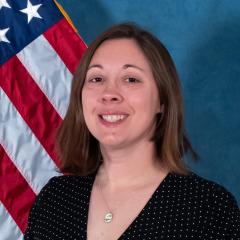
Veronica Knudtkins MPH
Acting AO of Research and Development
Lovell Federal health care
Phone: