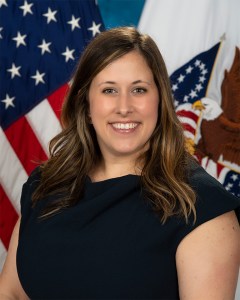
STATEMENT OF
FRANCES M. MURPHY, M. D., M. P. H.
ACTING DEPUTY UNDER SECRETARY FOR HEALTH FOR POLICY AND MANAGEMENT
DEPARTMENT OF VETERANS AFFAIRS
BEFORE THE
SUBCOMMITTEE ON NATIONAL SECURITY, VETERANS AFFAIRS AND INTERNATIONAL RELATIONS
COMMITTEE ON GOVERNMENT REFORM
U S HOUSE OF REPRESENTATIVES
April 10, 2000
Mr. Chairman and members of the Committee,
I appreciate the opportunity to appear before you today to discuss "VA Health Care in the New Millennium." With me today are Dr. Jeannette Chirico-Post, Network Director, Network 1; and Mr. William Conte, Medical Center Director, Edith Nourse Rogers Memorial VA Medical Center, Bedford, Massachusetts.
VHA National Perspective
The past decade has been characterized by dramatic change in the delivery of health care services in the United States. In the past five years the VA health care system has also made a tremendous transformation. VA transformed itself from a disease-oriented, hospital-based health care system to an integrated system providing a continuum of accessible, coordinated, patient-centered and prevention-oriented care. We have seen demonstrable improvements in our capacity to achieve consistent reliable, accessible, satisfying, high-quality care. We continue to face challenges of reducing medical errors in health care; of meeting the needs of an aging population; of incorporating the explosive growth of scientific knowledge into daily practice; of incorporating expensive new medical and information technologies; and of realigning our infrastructure to more effectively support current health care needs.
Structurally, the "New VHA" is composed of 22 Veterans Integrated Service Networks or "VISNs." Each VISN forms a regional health care system that provides a continuum of health care services to veterans who reside in a geographical area rather than a collection of individual facilities providing episodic services to veterans who come to those facilities.
More than at any other time in our history, VA more closely mirrors – and in many cases exceeds – the best in private sector health care. Indeed, this structural transformation underpins a quality transformation. Significant organizational changes include:
Especially notable clinical achievements have reduced avoidable hospitalizations, lowered mortality, and resulted in cost-savings through reductions in avoidable health care expenditures. For example:
Similar improvements have been seen in other areas of preventive health services such as screening for cervical and breast cancer and in the treatment of prevalent diseases such as diabetes and mental illness. Simultaneously, patient satisfaction has increased. In fact, VHA scored 79 on the externally conducted American Customer Satisfaction Index. This is significantly above the mean private sector health care score of 70. Loyalty and Customer Service scores were even higher at 90 and 87, respectively.
Mr. Chairman, the VA New England Health Care System (Network 1) has shared in the accomplishments of the VA health system and in some instances has lead the way. Network 1 also faces the same challenges that confront many other areas of the country.
Network Perspective
I will take the opportunity to discuss the accomplishments and challenges that are facing the VA New England Healthcare System (Network 1). Network 1 is an integrated and comprehensive health care delivery system that delivers care in six New England States: Maine, New Hampshire, Vermont, Massachusetts, Rhode Island and Connecticut. Twenty-five community based outpatient clinics are strategically located throughout New England and provide increased access to health care services for veterans. Network 1 has significant, longstanding affiliations with some of the most prominent medical schools in this Country. These include Boston University, Brown, Dartmouth, Harvard, Tufts, Yale, Universities of Connecticut, Massachusetts and Vermont Medical Schools and the University of New England. Funded Research Programs is another strong suit of Network 1 with the third highest research funding in VHA.
Network 1 has seen several changes in leadership during the past year. Mr. Fred Malphurs was appointed as the Interim Network Director, following the retirement of the former Network Director. Mr. Malphurs has been instrumental in setting a course that promotes teamwork, "open book management," and greater participation in network committees and strategic planning. He has taken every opportunity to re-examine the business practices in the organization and to foster an organization that thinks "Network". Recently, Dr. Jeannette Chirico-Post was appointed as the Network Director, after serving as the Acting Network Clinical Manager for six months. She brings to the position excellent management and clinical credentials and a passion for delivering quality health care services to the veterans of New England. She will provide effective leadership and expand the initiatives to provide quality, accessible health care services in an integrated delivery network.
In the spirit of the One VA initiative, Network 1 is working with the Veterans Benefits Administration (VBA) to explore co-location of VBA services on-site at the VA Connecticut Healthcare System and the Providence VA Medical Center. Recently, VHA and VBA in New England collaborated on a task force to streamline the process for compensation and pension examinations. The recommendations are being published in Network 1’s March issue of "Veterans’ Healthy Living," which will be mailed to over 200,000 veterans in New England.
Seeing the need for a comprehensive planning document to guide the Network, a draft strategic plan was created and disseminated in January 2000. This document is the beginning of the Network planning cycle and is designed to elicit feedback from stakeholders as to the direction the Network will take over the next several years.
Network 1 is committed to transforming its health care delivery system to respond to the challenges of the revolutions in health care and new technologies. The speed of change in the quantity, quality, and types of health care programs is rapidly increasing . For example, the new emphasis on community-based programs will result in an expansion of programs such as community-based outpatient clinics and home-based primary care. The Network’s goal is to increase the number of veteran users by 5% and decrease the cost of care by 5%. A major Network 1 initiative has been the development of an integrated health care system based on primary/ambulatory care. Implementing the primary care model has resulted in improved continuity, improved satisfaction and an increase in the number of patients served. The transition of some resources from hospital-based to CBOCs and other community-based programs have facilitated veteran’s access to care. The Network opened a new CBOC in Southern Maine on March 17, 2000. We expect the following CBOCs to be opened in 2000:
Massachusetts: Dorchester, Fitchburg, Gloucester, Martha’s Vineyard, Nantucket, Plymouth, Quincy and Turners Falls
New Hampshire: Conway, Wolfboro
Connecticut: Danbury
Rhode Island: Newport
Vermont: St. Johnsbury
Another strategic goal of Network 1 is to integrate health services by fully implementing Care Line management. Implementing Care Lines will result in a higher degree of coordinated care in Primary Care, Mental Health and Behavioral Sciences, Spinal Cord Injury, Specialty and Acute Care, and Geriatrics and Extended Care. Another major initiative is the consolidation of Boston and West Roxbury facilities. Acute inpatient services will remain on the West Roxbury campus and ambulatory care services will be enhanced at the Boston site. The consolidation will reduce redundant services and eliminate administrative duplication.
Numerous alliances that will expand access are being entered into through sharing agreements such as with TRICARE and the Department of Defense (DoD). New technologies such as telemedicine and teleradiology are also expanding access to care for patients. Accessibility of patient information is greatly enhanced for providers through Network 1’s information system, such as the electronic patient record and WebTop. Network 1’s Internet/Intranet sites also facilitate access to information. Further investments in information systems technologies will facilitate expansion of services into rural areas.
Network 1 is committed to providing quality health care and services to the veterans it serves across New England. The goal is to provide the right care, at the right time and at the right level required to safely and compassionately meet the unique needs of each veteran.
This process integrates and emphasizes customer feedback to assure that value is added for patients and other stakeholders. Since the inception of standardized customer service feedback surveys, Network 1 has consistently been the leader in Ambulatory Care Customer Satisfaction. Feedback from patients is one of the most significant measures of quality. Network 1 is currently number "ONE" in the country in the percentage of ambulatory patients rating overall quality of care as Very Good or Excellent. In addition, for FY 1998 and FY 1999, Network 1 was the only Network to perform at least two standard deviations better than the national VHA average in each of the categories of customer service and is quickly approaching the standard of excellence reported by the Picker Institute (Access, Preferences, Patient Education; Emotional Support; Coordination of Visits; Overall Coordination; Continuity of Care, Courtesy, Pharmacy and Specialty Care).
With regards to quality of care measures, Network 1 has demonstrated progressive and consistent improvement in the areas of disease prevention, the management of chronic disease, and use of nationally accepted clinical practice guidelines. Although they have not yet reached their performance goals, they have demonstrated a substantial rate of improvement in performance overall in national measures. They continue to perform exceptionally in the area of palliative care.
Network 1 has a strong commitment to continuous quality improvement utilizing an integrated approach to standardize to best practices throughout the Network. There has been great success in significantly enhancing access to care by decreasing waits and delays for clinic appointments as a part of a VHA collaborative project with the Institute for Healthcare Improvement to reduce waits and delays. We are proud of Network 1’s accomplishments and will aggressively spread lessons learned to include clinics Network-wide.
Other areas of emphasis to add value to veteran’s health care services include: pain management, case management, clinical practice guidelines, utilization management, telemedicine and telephone advice programs.
Network 1 was the first Network to obtain JCAHO Network Accreditation with Commendation. It was recognized for meritorious achievement as a finalist for the Kizer Quality Achievement Recognition Grant last year and is committed to continuing to challenge itself through these and other external assessments. Network 1 is the main site for the Quality Scholars Fellowship Program and one of four National Patient Safety Centers of Inquiry in VHA.
With quality, cost, and marketplace challenges facing Network 1, communications have become even more critical to assure a high performance organization. Network 1 has established a communication system that is customer-focused and supports the Network’s mission and goals. Network 1 has embarked on a new mission to communicate more often and in more detail with veterans, employees, affiliates, congressional offices, local unions and other stakeholders. A Communications Council has been established with representatives from Network staff, Care Line managers, patient education representatives, and veterans.
A number of communication tools have been developed that are responsive to the needs of patients, employees, and stakeholders and enhance understanding of Network initiatives. The monthly electronic newsletter, "News at a Glance" is distributed to approximately 9,100 recipients including employees, affiliates and congressional offices to provide up-to-date information on new initiatives and events occurring throughout the Network. The first issue of a quarterly health and wellness newsletter entitled, "Veterans’ Health Living" was just distributed to 200,000 user and non-user veterans in New England. This newsletter provides patient education, health promotion, and highlights Network initiatives. A quarterly published employee newsletter will be published in April to include more in-depth articles on strategic initiatives, awards, and achievements from the six New England States.
The communication publications are also made available on the Intranet/Internet web sites to facilitate access to information for patients, employees, and other stakeholders. In addition, a section entitled "Frequently Asked Questions" for the Director was added to the web site as another means of providing consistent, coordinated information. All of these publications have built-in customer surveys to ensure there is a two-way communication system process.
The Executive Leadership Council, the policy-making body of the Network, has been expanded to include a broader representation of the stakeholder interests in the Network. Over the last four months, this more inclusive representation of local labor unions, clinical managers and employees, has proven invaluable to the deliberation and implementation of strategic direction for the Network.
Challenges facing Network 1
One of the greatest challenges facing Network 1 is the need to come together as one Network instead of its current parochial orientation of nine individual medical centers. Recognizing the reality of the parochial interests of the six New England states with individual congressional delegations, veteran service organizations, local unions and individual medical school affiliations, Network 1 needs to move from a hospital-centered system to a Network centered system which provides health care services along the entire health care continuum. The Network must re-engineer it business processes and implement clinical practice guidelines to ensure there is a single, consistent standard of quality health care regardless of the geographic location where the care is delivered.
Network 1 will further implement Service/Care Lines as it evolves to a more clinically integrated delivery system. Service/Care Lines are intended to enhance the provision of uniform, high quality care/services throughout the Network by reducing variations in care and standardizing availability and coordination of services. The Service/Care Line is a multidisciplinary team united by function and driven by outcome goals for the services it provides. This allows for improved management of patients along a seamless continuum of care.
Seven Network Clinical Service Lines are in various stages of development and implementation including Laboratory, Primary Care, Mental Health and Behavioral Sciences, Acute and Specialty Care, Spinal Cord, Geriatrics and Long-Term Care and Prosthetics. Each Care/Service Line has an identified leader who, in the future, will manage resources to achieve measurable outcomes of improvement. An eighth consolidated program, Pharmacy, is currently being planned for rapid deployment.
The Geriatrics & Long- Term Care Line is currently being implemented. This care line will play an integral role in implementation of the provisions in the Millennium Bill. There will be a shift of emphasis by promoting increased care at home and within the community where clinically appropriate. Increased use of technology such as telemedicine will assist in this transition. VA nursing home care will serve as the most intense level of extended care and will focus on subacute and restorative care with the goals of maintaining function and/or providing chronic care at the least intense level.
Network 1 has initiated a series of meetings to partner with the Commandants of the State Veterans Homes in New England. These meetings have highlighted our mutual interest in serving veterans and to date, have accomplished the following initiatives: sharing prime vendor contracts; sharing agreements for purchasing medical supplies; priority access to excess VA equipment; and lease agreements for unused VA space.
The VERA resource allocation system was developed in response to a congressional mandate that required VHA to allocate funds in an equitable manner. This allocation system was developed to match resources with patient needs across the country. This created shifts in resource allocation, phased in over a three-year period. Although, this Network received reductions in resource allocations in the first two years under VERA. In FY 2000, Network 1 received a 5.5% increase or $43 million dollars over its FY 1999 allocation – which equates to a 6.0% increase or a Network average price of $4,853. Assuming VA receives the President’s requested funding In FY 2001 for Veterans Medical Care, it is projected that Network 1 share of VERA funding would be 2.9% or $24 million dollars above FY2000.
Network 1 has a cost per unique patient that is approximately $400 greater than the national mean, and has staffing ratios that are some of the highest in the country. Although significant strides have been made to reduce overall cost per patient, additional efforts to gain efficiencies through reorganization of health care delivery systems are required. These efforts will improve the Network’s ability to deliver high quality care and serve more patients at a reduced cost in the future.
It is widely recognized that access to information will be the cornerstone of the "New VHA". The successful implementation of information technology will have a direct impact on Network 1’s success in delivering integrated health care services throughout New England. VHA has made the development of a computerized patient record a major long-term goal. In the emerging clinical information environment, all information relevant to treating a patient must be available in such a way that it is secure yet accessible to health care providers clinical and management decision-makers, educators, and researchers.
CPRS, the Computerized Patient Record System, enables clinicians, nurses, clerks, and others to enter, review, and continuously update all information connected with a patient. CPRS, which is in use at all nine VA medical centers in Network 1, organizes and presents all relevant data on a patient in a way that directly supports clinical decision making and patient care. The ultimate goal of CPRS is to create an integrated patient record system that gives physicians both efficient ordering and documentation capabilities as well as enough information to make better decisions regarding orders and treatment. This system provides a safer environment for our patients and staff.
Network 1 is actively implementing the VistA imaging system, which captures clinical images and scanned documents and makes them part of the patient's electronic medical record. Images and text files are provided in an integrated manner which facilitates the clinician's task of correlating the data and making patient care decisions in a timely and accurate way. The system aids communication and consultation among physicians - - whether in the same department, in different services, or at different sites.
To allow clinical access to information throughout New England, Network 1 is implementing a web browser technology called WebTop. This state-of-the-art information technology allows the clinical staff to access a single database and retrieve electronic medical record information on any patient treated at other VA medical centers in VISN 1.
Medical Center Perspective
Since this hearing today is being held in Peabody, Massachusetts, I will provide you with information on a few of the many successful local initiatives. VHA and Network 1 appreciate the support and encouragement of the New England Congressional Delegation in the opening of new Community Based Outpatient Clinics. Congressional support was instrumental in the success of the clinics in Lynn and Haverhill, and to the proposed clinic for Gloucester. The clinic in Haverhill is located within Hale Hospital, a facility-owned and operated by the City of Haverhill, creating a mutually beneficial partnership with the community. The clinic in Lynn is located in a private sector medical building. Both the Lynn and Haverhill clinics provide primary care services and have expanded to include mental health counseling.
The Edith Nourse Rogers Memorial Veterans Hospital, in Bedford, operates an Alzheimer’s care program that is nationally known for the comprehensive quality care provided. It is comprised of an Outpatient Program, an Adult Day Care Center, and an Inpatient Program. The Alzheimer’s care program is fully integrated with the Geriatric Research Education & Clinical Center (GRECC). The Bedford GRECC program is a unique program in that it is fully integrated with clinical care; a full partner with it’s academic affiliate (Boston University); and designated by VHA Headquarters as a National Center to facilitate cooperative efforts between the VA, private sector health care organizations and pharmaceutical companies.
To enhance the continuum of health care services provided to veterans, the Bedford VA Medical Center has embarked on two innovative projects utilizing the Enhanced Use sharing authority. The first proposal is to establish a cooperative venture with a private sector organization for construction and operation of an Assisted Living Center at the Bedford VA Medical Center with an emphasis on patients with Alzheimer’s. In return for the ability to utilize VA property, the private sector organization will provide bed space for VA patients at no charge. This proposal is expected to be approved and construction started in 2001. The second proposal would establish a cooperative venture with the New England Shelter for Homeless Veterans (NESHV), a non-profit organization, for construction and operation of 40 units of Single Residency Housing at Bedford. In return for the ability to utilize VA property the NESHV will provide several units for VA patients at no charge. This proposal is expected to be approved and construction started in the near future.
Another example of a VA-private sector partnership is in the area of health care services to homeless veterans. A private sector homeless services provider, Ms Leslie Lightfoot, has received a VA Grant to obtain, equip and operate a health care van in the greater Worcester, MA area. This program will provide the van at scheduled, designated locations to perform basic health screenings and follow-up. The Bedford VA Medical Center will provide expertise in the planning phases of this project and will provide equipment, supplies and personnel to support this important homeless outreach effort which is expected to be operational by this fall.
Conclusion
Thank you for the opportunity to discuss the achievements and challenges of VHA at the National, Network and local level. This concludes my opening statement and I and my colleagues would be pleased to answer any questions you or the members of the committee may have.