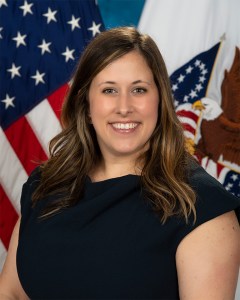
STATEMENT OF
THOMAS HOLOHAN, M. D.
CHIEF OFFICER, PATIENT CARE SERVICES
VETERANS HEALTH ADMINISTRATION, DEPARTMENT OF VETERANS' AFFAIRS
FOR THE
HOUSE COMMITTEE ON GOVERNMENT REFORM AND OVERSIGHT
SUBCOMMITTEE ON HUMAN RESOURCES
March 5, 1998
Mr. Chairman, and members of the Subcommittee, I am pleased to appear today to discuss the Department of Veterans Affairs response to the health care challenges posed by hepatitis C infection.
Hepatitis C virus infection presents a difficult problem for the entire health care community in the United States, including the Department of Veterans Affairs. Interestingly, the dramatic increase in information about this disease is based on the relatively recent development of a high quality laboratory test to determine the presence of hepatitis C virus antibody in persons who have been infected with this virus. The response of the medical community to this new data about the natural history of the disease is thus nascent.
For the Department of Veterans Affairs, there are at least four challenges and opportunities for dealing with this viral infection and the potential for consequent liver disease.
It was first necessary for the Department to identify the extent of the problem related to hepatitis C among its veteran patients. Therefore, in 1991, the Department began tracking, in aggregate, the number of persons seen in Veterans Affairs facilities who were positive for antibody to hepatitis C virus. This has subsequently been continued on an annual basis. It should be noted that at the initiation of this tracking system, availability of the antibody test for hepatitis C was limited, and information about the disease was just becoming available to the general medical community. In 1991, there were slightly over 6,600 persons in the VA system who tested positive for antibody to hepatitis C virus. This increased steadily and significantly over the subsequent years increasing to approximately 18,800 persons in 1994, and approximately 21,400 in 1996. Although the absolute numbers continued to increase, the rate of rise has slowed significantly over the last three years, and this may indicate a future plateau of antibody positivity. There are, however, limitations of these data that constrain conclusions about the actual number of infected veteran patients and rate of infection. First, it is important to note these data do not represent unique persons since some people may have been tested in more than one year. Moreover, it is unclear whether this six year trend represents a true increase in number of persons with hepatitis C antibody or whether the trend is due to the improved availability of modern testing technology in the United States, and/or the increased information about the disease throughout the health care community. Finally, since this was not a serologic survey but rather a mechanism that simply recorded all persons who had a positive test for hepatitis C antibody, one cannot infer that this tracking has captured all patients in the VA system with hepatitis C virus antibody. Notwithstanding, this does represent a significant number of persons infected with hepatitis C virus in the VA system. It should also be appreciated that because most patients remain relatively asymptomatic (about 80% of cases), and because over a ten- to twenty year span 20-30% develop cirrhosis, our data do not imply that each of our antibody-positive patients has overt clinical liver disease related to hepatitis C virus infection. We also have found that these antibody-positive patients were widely distributed across the United States, with increases over time noted in many of the large metropolitan areas. Therefore, the Department was able to answer the first challenge in a timely manner by defining, in general terms, the extent of the problem within the veteran population served.
In an effort to disseminate this information to the VA and the health care community at large, these data have been presented at national and international meetings, and have recently been published in the Journal, Military Medicine.
While this sort of aggregate data defines the extent of the problem, it does not deal directly with the issue of the demographics of the persons who may be at highest risk for this infection. This information is critical for planning any future intervention, screening, or therapeutic trials. Therefore, the Department has recently instituted an automated surveillance system to define pertinent patient characteristics more clearly. Early data sets from this initiative indicate that this surveillance system is successful, in that approximately 85% of all our medical centers are "on line"; thus we believe we are able to identify the highest risk groups in the Department. These data can be used for the purpose of education, intervention, and future therapeutic trials, and will be disseminated to the wider health care community for informational purposes.
The second challenge for the Department has been to provide information regarding hepatitis C to both health care providers and veteran patients. The most efficient way to accomplish this goal is to educate the health care providers about hepatitis C, as they are the interface between the larger health care system and the individual patient. This has been done in a variety of settings, but emphasized in face-to-face educational meetings directly with providers, as well as through publication and presentation of VA data as previously mentioned. VA has also established a lookback program to deal with issues brought forward by the pharmaceutical and biological industries related to potentially contaminated products. Obviously, hepatitis C virus infection is not a specific VA problem; instead, it is an emerging pathogen of national and international importance.
The third challenge for the VA is in the area of research. Critical components of the research agenda include the basic science of the hepatitis C virus and applied research directed toward the natural history of disease, prevention strategies, and therapeutic intervention. VA scientists have been very active in all areas. The number of grants on hepatitis C virology is variable since, on a recurring basis, some grants are funded while others come to conclusion. However, over the last decade approximately 30 VA investigators have received funding related to investigations of hepatitis C. This represents approximately 137 individual projects. VA funding for hepatitis C research totals nearly $12 million, but a number of our investigators also receive funds from other sources, such as the National Institutes of Health, the pharmaceutical industry, etc. In addition, other proposals with particular emphasis on defining treatment strategies for persons with hepatitis C virus disease and other co-morbidities, are currently under review. This is a group commonly seen in the VA and often not addressed in studies performed in the corporate or private setting.
The VA Cooperative Studies program is currently planning a large-scale treatment trial to determine whether interferon can prevent progressive liver disease in veterans infected with the Hepatitis C virus. The study will include more than 500 veterans at 17 VA medical facilities. Enrollment of patients is expected to take 3 years, and each veteran enrolled will be treated for 4 years; thus, the total duration of the study is expected to be 7 years. Final review and approval of the study will be made at the May 1998 meeting of the VA Cooperative Studies Evaluation Committee. In addition, the VA in collaboration with the Department of Defense is planning to issue an RFP for studies on emerging pathogens including hepatitis C. We believe this to be a well-rounded portfolio in research on hepatitis C virus infection and disease.
The fourth challenge of hepatitis C virus relates to the relatively poor efficacy of currently available treatment modalities. The only FDA-approved drug for treating hepatitis C virus disease, interferon alpha, can be expected to have a long-term positive effect in approximately 20-25% of patients. While this is certainly disappointing, observation of some antiviral effectiveness does present a major opportunity for future improvements in care for patients with this illness. A recent National Institutes of Health Consensus Conference Panel statement recommended fairly narrow patient selection criteria for treatment for hepatitis C virus disease; moreover, selection generally required a liver biopsy prior to therapeutic intervention. This again points to the need for better therapeutic agents with greater efficacy, fewer side effects, and greater applicability to the patient population in general and the veteran patient population in particular. The VA is attempting to meet this challenge through its research funding mechanisms, such as the Cooperative Studies Program in which the VA has been a national leader over the past several years. The VA will continue to take a major leadership role in the area of large studies evaluating treatment regimen to meet the needs of the veteran, and by extension, the population in general.
In conclusion, hepatitis C virus disease presents major challenges for the health care system in the United States and the world. The VA has dealt proactively with this problem in a number of critical areas including: studying the epidemiology of the disease in the veteran population; educating health care providers; researching the basic and clinical sciences on hepatitis C virus and hepatitis C virus infection; and by establishing a leadership role in studies designed to improve specific treatment interventions for patients with hepatitis C virus disease.
However, solutions will not be easily found. Chronic viral diseases are extraordinarily difficult to contain or eradicate, and proof of drug efficacy can require extended periods of time, particularly with hepatitis C virus disease where quiescent periods may last 20 years and progression of disease may take a decade or more. Therefore, the challenges will continue, and the Department of Veterans Affairs will make every effort to meet those challenges in an aggressive and innovative manner.
Mr. Chairman, that concludes my testimony and we will gladly answer any questions you or other Subcommittee members may have.