



|
VistA Imaging Overview The VistA Imaging system integrates clinical images, scanned documents, and other non-textual data into the patient’s electronic medical record. VistA Imaging can capture and manage many different kinds of images including:
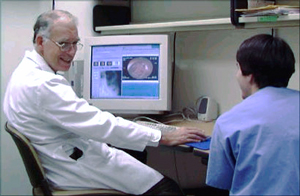
Captured images are combined with text data to facilitate a clinician’s task of correlating information and making timely and accurate patient care decisions. VistA Imaging also serves as a tool to aid consultation among physicians and communication between a physician and patient—whether in the same department, in different services, or at different sites. The VistA Imaging System’s primary functions are: VistA Imaging benefits both the patient and the clinician. At VistA Imaging sites, images are typically viewed during rounds, conferences, procedures, consultations, and operations. Workstations are generally located in conference rooms, ICUs, and shared ward offices, as well as clinician’s private offices. Clinicians often review images when placing orders or writing progress notes using the VA’s Computerized Patient Record System (CPRS). VistA Imaging provides the multimedia component of CPRS, and completes the online CPRS chart by providing ready access to medical images and scanned documents such as signed consent forms, advance directives, and drawings.
A patient’s photo identification, EKGs, and a menu of thumbnail images are automatically displayed when a patient is selected in CPRS. Images are associated with progress notes and reports of radiology exams, clinical procedures, surgical operations, and pathology specimens. When an image is present, an image icon will appear to the left of the note title or report in CPRS. When the user clicks on the note or report, the associated images will be displayed for user selection and viewing. In addition to providing access to local images, Imaging’s Remote Image Views feature can automatically locate and allow clinicians to display images stored at any other VA facility in the nation, providing an integrated view of image studies to the clinician. Facilities can also implement the VistA Imaging TeleReader for remote diabetic retinopathy screening or for teledermatology. TeleReader allows images acquired at one facility to be read by specialists at other, centralized locations. This allows both greater convenience to the patient and better utilization of available interpreting specialists. Images may be captured in several ways:
Image capture workstations are typically located near the source of the images unless centralized scanning will be done. For example, an image capture workstation might be placed in the gastroenterology (GI) lab or pathology suite. The video output of the camera would be connected directly to the capture workstation itself.
Most radiology, ophthalmology, and dental images may be automatically captured using a DICOM gateway. Captured images are incorporated into a patient’s online medical record and can be viewed on workstations using clinical or diagnostic-quality display. The VistARad diagnostic workstation allows radiologists to interpret radiology exams without printing film, providing a number of important features including:
The VistA Imaging System includes a “core infrastructure” consisting of the following hardware components. These components provide short- and long-term storage and management of all images associated with a patient’s medical record.
Clinician Benefits
To be notified when this site is updated, or for additional information, contact
|